If you're a woman in your 30s or 40s and you've started healthy habits five times and quit five times, you probably don't have a willpower problem. You have a reason problem.
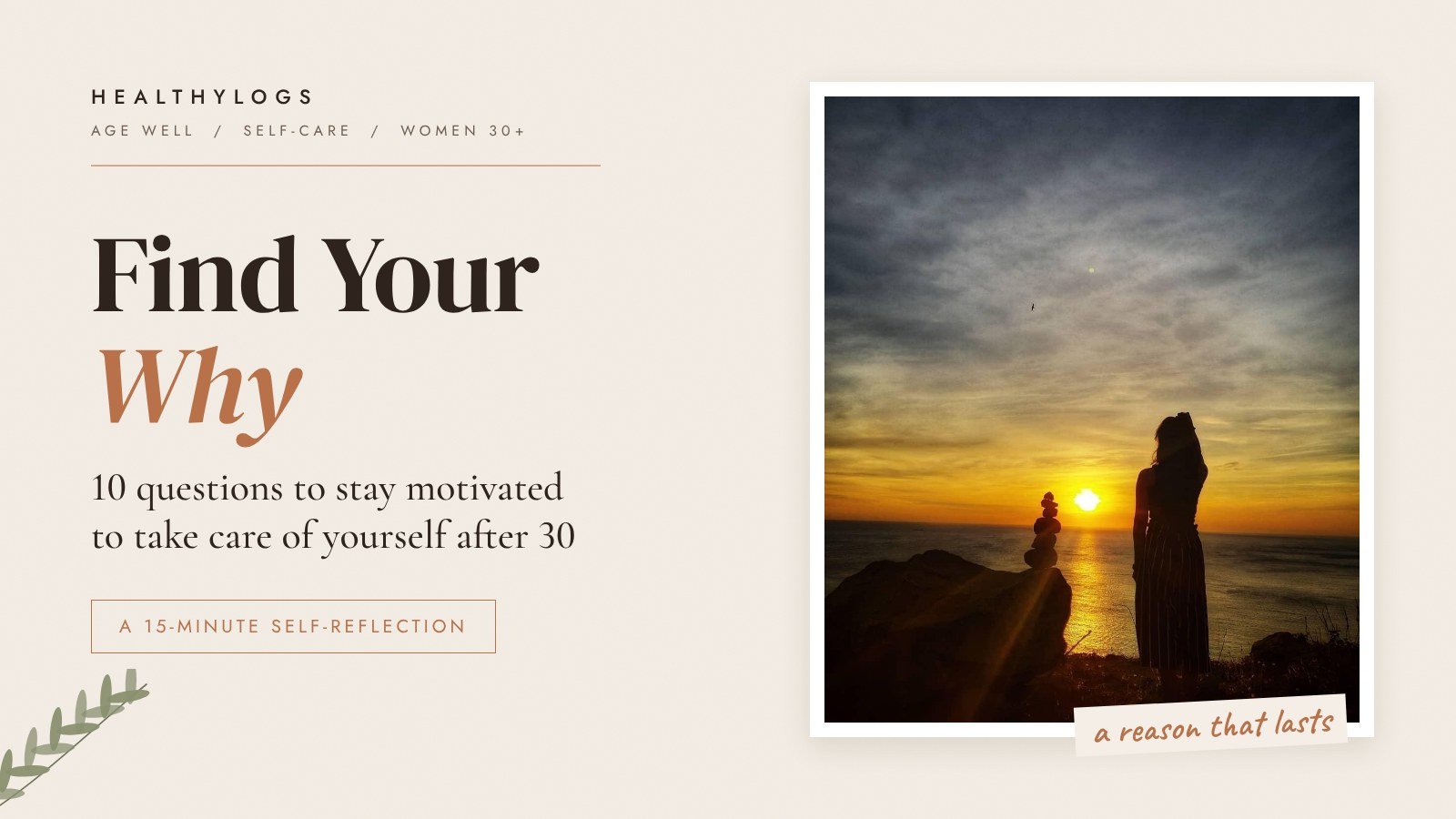
Research suggests habits last longer when the reason behind them is personal and felt in everyday life, like more energy or a calmer mind, rather than weight or looks. You can find that reason in about 15 minutes, with a pen and the 10 questions below.
Why your "why" matters more than your plan
Most of us start with a goal like "lose 10 pounds before summer." It works for a few weeks. Then work gets busy, summer comes and goes, and the goal quietly fades.
That pattern shows up in research. In a one-year study of women aged 40 to 60, those who exercised for everyday quality of life, such as feeling good and less stressed, exercised about 34% more than women who exercised mainly for weight or appearance.
A review of 66 studies points the same way: motivation that comes from inside, because you enjoy it or it truly matters to you, was a stronger predictor of sticking with exercise long term.
In other words, a reason you can feel on a normal Tuesday beats a reason you might reach someday.
Why your why matters even more after 30
Your 30s and 40s are when small, steady habits start to pay off most. Three quiet changes are already underway:
- Muscle: you gradually begin losing muscle mass and strength in your 30s or 40s, as much as 8% per decade.
- Bone: from about age 30, your body breaks down bone a little faster than it builds it.
- Hormones: perimenopause usually starts in your mid-40s, but it can begin as early as your mid-30s.
None of this is a reason to panic. It's a reason to stop restarting. A goal you abandon every few weeks can't keep up with these changes. A why that lasts can.
Surface why vs. deep why
Your first answer is usually a surface why. Keep asking "and why does that matter to me?" until you hit something that feels a little emotional. That's your deep why.
- I want to lose weight. Why?
- So I feel better in my clothes. Why does that matter?
- Because I want to stop thinking about my body all day and just enjoy my life.
That last line is your why. Notice it isn't about a number at all.
10 questions to find your why
Grab a notebook. Don't overthink it. Your first answer is usually the honest one.
Right now
- What made you start looking for a change today?
- When did you last feel really good in your body? What was different then?
- What do you want more of: energy, calm, strength, sleep or confidence?
Your everyday life
- What would a good, normal Tuesday feel like?
- What do you keep saying "I'm too tired for"?
- Who or what gets your best energy, and is there any left for you?
Future you
- Picture yourself at 70. What do you still want to be able to do?
- What do you want to stop worrying about in 10 years?
- What would you regret not starting this year?
Your sentence
- Finish this line: "I take care of myself because…"
How to turn your why into a habit that lasts
- Write your why in one sentence. Put it where you'll see it daily: your phone lock screen, the bathroom mirror, a sticky note on the kettle.
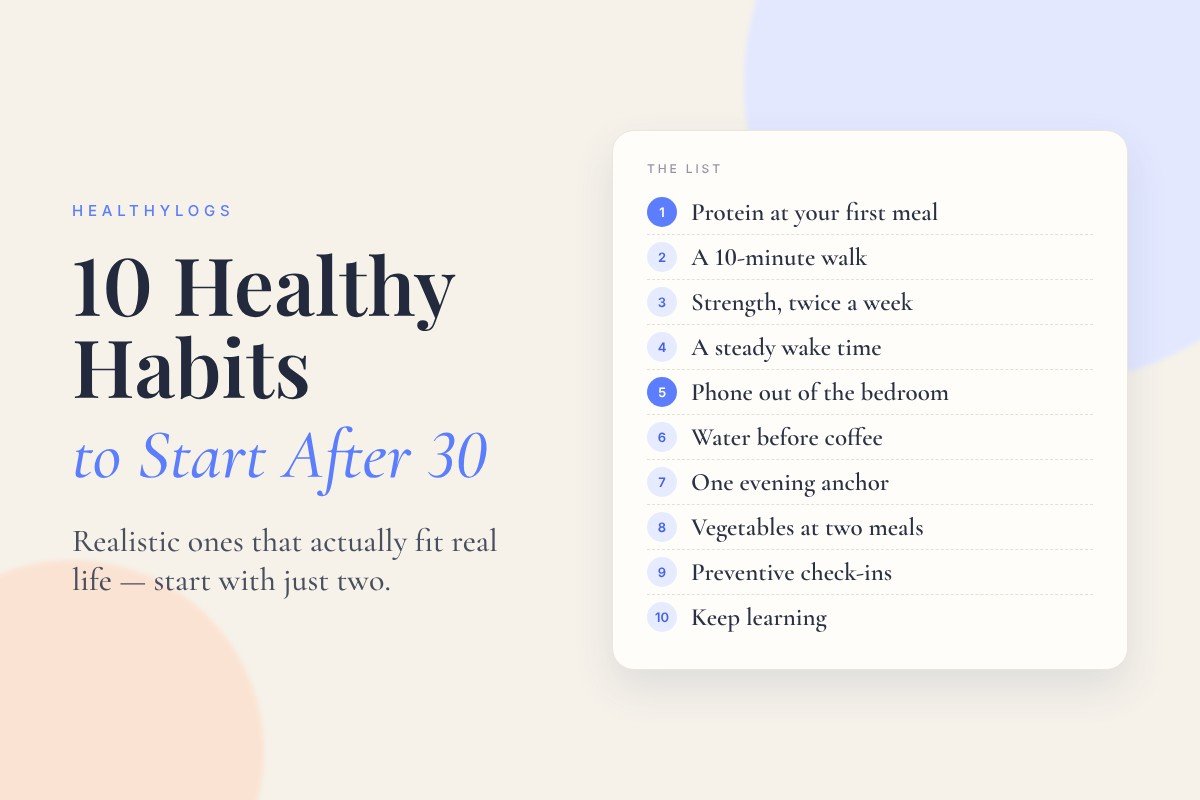
- Match one tiny habit to it. If your why is energy, try a 10-minute walk after lunch. If it's calm, try five slow breaths before bed. If it's aging well, try two short strength sessions a week to protect the muscle you have.
- Give it time. In a well-known habit study, a new daily habit took a median of 66 days to feel automatic, ranging from 18 to 254 days. Think two months, not 21 days.
- Never miss twice. The same study found one missed day didn't meaningfully set people back. One skipped day is just life. Come back tomorrow.
- Revisit your why when life changes. A new job, a move, a hard season. Your why at 32 may not be your why at 42, and that's okay.
Try this: a letter to future you
In one experiment, people who wrote a letter to themselves 20 years in the future were more likely to exercise afterward than people who wrote to themselves just three months ahead. Feeling connected to your older self seems to make today's choices feel more real.
Try it tonight. Write five lines to yourself 20 years from now. Tell her what you're starting, and why.
What I tried
My surface why used to be: look good and keep up with the trend. So I tried yoga, then the gym, pushed too hard, and quit both.
Then I noticed small things. Walking uphill left me out of breath. Carrying groceries home felt heavy. Why did that matter? Because I want my body to keep up with my life. And why does that matter? Because I want to travel the world with my husband and stay healthy for a long time.
That's my deep why. It doesn't fade when the trend does.
Not sure what your why is yet?
Get the free Find Your Wellness Why worksheet. It walks you through these questions, shows you which of five "why types" you are, and matches you with one gentle starter habit. Join the healthylogs newsletter below and you can download it straight away.
Free · 15-minute worksheet · 6 pages
Get the free Find Your Wellness Why worksheet
Go from a surface goal to a reason you can feel on a normal Tuesday, then match it with one gentle habit.
Free. You'll also get one short, honest email a week. Unsubscribe anytime.
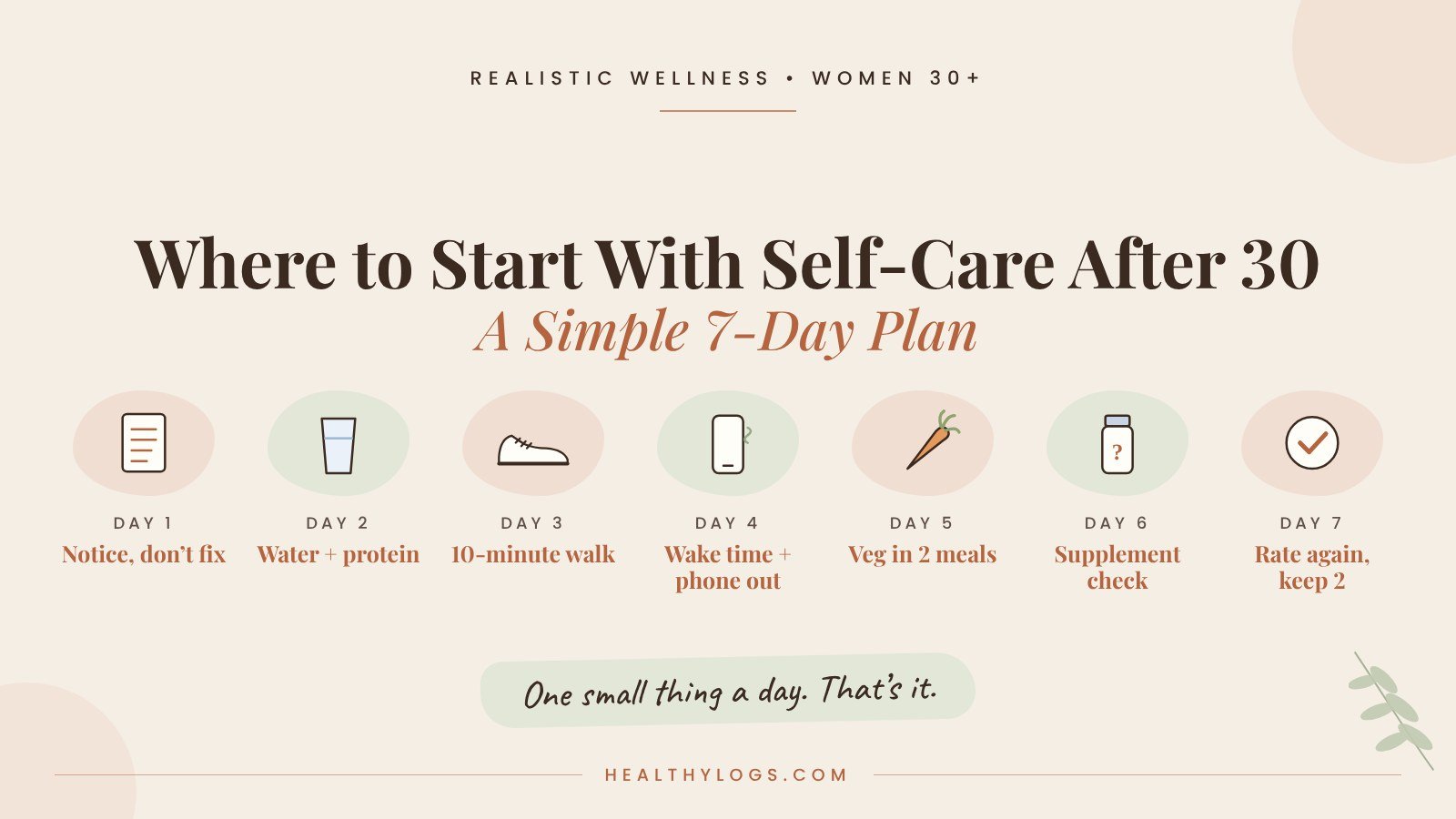
New here? Start with the simple 7-day self-care plan.
FAQ
What if my only reason is weight loss?
That's a fine starting point. Ask "why does that matter to me?" a few more times. The deeper reason is often about energy, comfort or confidence, and that's the one that tends to last.
How long does it take to build a healthy habit?
Usually longer than 21 days. Research suggests around two months on average, with big differences between people, so be patient with yourself.
Is it too late to find my motivation after 30 or 40?
Not at all. In the study above, the women were 40 to 60. A clear, personal why helps at any age. Pick one small habit and start this week.
This article is for general education and is not medical advice. If you have a health condition, are pregnant or take medication, check with your doctor before starting a new exercise routine.
Sources
- Segar ML, Eccles JS, Richardson CR — Rebranding exercise: closing the gap between values and behavior. International Journal of Behavioral Nutrition and Physical Activity, 2011
- Teixeira PJ et al. — Exercise, physical activity, and self-determination theory: a systematic review. International Journal of Behavioral Nutrition and Physical Activity, 2012
- Lally P et al. — How are habits formed: modelling habit formation in the real world. European Journal of Social Psychology, 2010
- Rutchick AM et al. — Future self-continuity is associated with improved health and increases exercise behavior. Journal of Experimental Psychology: Applied, 2018
- Cleveland Clinic — Sarcopenia
- HealthLinkBC — Low bone density
- Cleveland Clinic — Perimenopause